


When Growth Isn't the Question: The Transformation Dilemma Facing Businesses Today

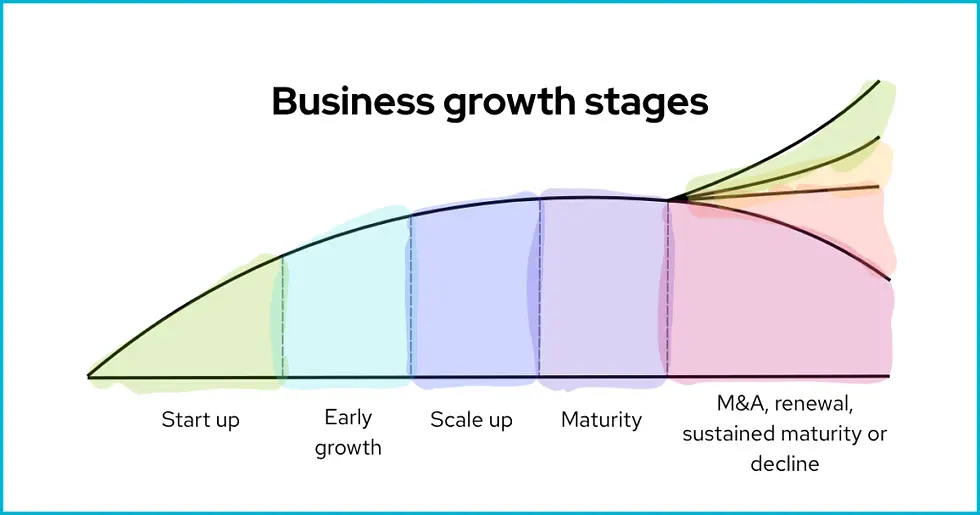
Growth remains the objective. But there comes a point in the life of a business when growth can no longer be unlocked by asking growth questions. Growth is the Question every Leadership team asks.
Over the years, I have participated in countless strategy discussions, board reviews, annual planning sessions and transformation initiatives. Regardless of the industry, the conversations almost always begin in the same place.
How do we grow? How do we acquire more customers? Expand revenue streams? Improve margins? Leverage emerging technologies? Enter new markets? Defend against new competitors?
These are important questions. In fact, they are the questions leaders are expected to answer.
Yet increasingly, I find myself observing that there are moments in a company's evolution when growth is no longer the most important question in the room.
Not because growth has become less important. But because growth can no longer be unlocked by the same thinking that created it in the first place.
At those moments, organizations face a very different challenge.
The conversation must shift from:
"How do we grow?"
to
"Who are we?"
Or perhaps even more importantly:
"Who do we need to become?"
This is the point at which transformation begins.
The Difference Between Growth and Transformation
Growth and transformation are often used interchangeably. They shouldn't be.
Growth is typically about extending the current business model. It focuses on scaling what already exists—more customers, more products, more markets, more efficiency.
Transformation is something altogether different.
Transformation asks whether the assumptions underpinning the business are still valid.
It challenges the definition of the business itself.
For years, sometimes decades, success reinforces a particular view of who we are. That view becomes embedded in organizational structures, operating models, incentives, talent decisions and culture. Eventually, it becomes difficult to distinguish between the customer need being served and the way the organization has historically chosen to serve it.
That is why transformation is so difficult.
It is not merely a strategic exercise. It is an exercise of re-invention.
The Trap of Defining Ourselves Too Narrowly
One of the most common patterns I see in organizations is a tendency to define themselves by their products, channels or business models rather than by the customer need they exist to serve.
A broadcaster believes it is in the television business.
A bank believes it is in the banking business.
A retailer believes it is in the store business.
A newspaper believes it is in the newspaper business.
These definitions seem obvious until the world changes around them.
The businesses that survive disruption are often those that discover a deeper truth about themselves before the market forces them to. They move from product-centric thinking to customer-centric thinking. They stop asking what they sell and start asking what problem they solve.
That shift sounds simple. In reality, it changes everything.
Case Study 1: Netflix – From DVDs to Entertainment
Netflix is perhaps one of the most cited transformation stories in modern business, but I believe many people misunderstand the lesson.
Netflix did not succeed because it moved from DVDs to streaming. Streaming was simply the manifestation of a deeper strategic insight.
The company stopped thinking of itself as a DVD rental business and began thinking about the customer need it served. People were not looking for DVDs. They were looking for convenient access to entertainment.
Once Netflix understood that distinction, an entirely new set of possibilities emerged.
Streaming became obvious.
Personalized recommendations became important.
Original content became strategic.
AI-driven discovery became a differentiator.
The company transformed because it redefined the business it was in. Growth followed.
Case Study 2: Microsoft – Reinventing an Identity
When Satya Nadella took over Microsoft, the company was hardly struggling. It was already one of the world's most successful technology businesses. Yet there was a growing realization that defining the company primarily through Windows and Office risked limiting its future.
Under Nadella's leadership, Microsoft reframed its identity. The company evolved from being a software provider into a cloud-first platform company and, more recently, an AI-first enterprise.
The transformation was not fundamentally about technology. Microsoft had always possessed extraordinary technological capabilities.
The real transformation was in how the organisation saw itself and the role it wanted to play in the future, using Cloud Platforms, use of AI for enterprise operations and so on..
That shift unlocked one of the most remarkable growth stories in modern corporate history.
Case Study 3: Starbucks and the Power of Reframing
Starbucks was never simply selling coffee.
Its famous "third place" philosophy recognised that customers were seeking something deeper—a place between home and work where they could connect, pause, meet and belong.
By redefining itself around experience rather than product, Starbucks created a platform for growth that extended far beyond coffee.
The product remained important. But the meaning of the product changed.
And that changed the trajectory of the business.
Why This Matters More Than Ever in the Age of AI
Today, almost every industry is experiencing some form of disruption.
Media companies are questioning whether they are in the broadcasting business or the attention business.
Banks are rethinking whether they are providers of financial products or partners in financial wellbeing.
Retailers are discovering that they may be in the business of community, convenience and experiences as much as commerce.
At the same time, AI is accelerating change across every sector.
Much of the current discussion around AI focuses on productivity gains, automation and efficiency improvements. These are undoubtedly important.
But I suspect the bigger impact of AI may be something else entirely. AI is forcing organisations to revisit some of their most fundamental assumptions.
How customers discover information. How decisions get made. How services are delivered. How value is created. And ultimately, who the organisation needs to become.
The companies that thrive over the next decade may not necessarily be those that adopt AI the fastest.
They may be those that use AI as an opportunity to rethink their identity, business model and role in the ecosystem.
Recognising the Inflection Point
Not every business requires a radical reinvention.
Many organizations can continue to grow through operational excellence, product innovation, market expansion and better execution. Those are legitimate and powerful growth levers.
However, there comes a point in the trajectory of some businesses when those levers begin to yield diminishing returns.
Customer behaviour shifts.
Technologies converge.
Industry boundaries blur.
New entrants emerge with fundamentally different economics.
The assumptions that once fuelled growth become the very things that constrain it. That is the inflection point.
The moment when growth questions stop producing growth answers. The moment when organisations need to ask different questions.
The Leadership Imperative
The most important transformation conversations rarely begin with strategy frameworks, operating models or technology roadmaps.
They begin with reflection.
What business are we really in?
What customer need do we uniquely serve?
What role do we want to play in our customers' lives?
What assumptions about ourselves have become so deeply embedded that we no longer question them?
These are uncomfortable questions because they challenge identity.
Yet they are often the questions that determine whether an organization remains relevant over the next decade.
Growth Is Still the Goal
This is not an argument against growth. Far from it.
Businesses exist to create value, expand their impact and generate returns. Growth remains the objective.
But the questions that unlock growth are not always the same.
In one phase of a company's life, growth comes from doing more of what already works.
In another phase, growth comes from improving execution, productivity and scale.
And then there are moments when growth requires something more profound.
A willingness to challenge long-held assumptions. A willingness to redefine the business. A willingness to become something different.
The irony is that some of the greatest growth stories in business emerged from exactly this shift.
Netflix did not abandon growth when it redefined itself.
Microsoft did not stop pursuing growth under Nadella.
Starbucks did not lose sight of growth when it focused on experience.
In every case, growth remained the destination. But transformation became the vehicle.
Perhaps that is the lesson for leaders today.
Growth is always the goal.
But there are moments when growth is no longer the question.
Transformation is. And growth becomes the outcome.
About the Author
Anjali Malhotra is a growth and transformation advisor with over three decades of experience across media, consumer, retail and financial services. She works with leadership teams on customer-centric growth, business transformation, culture and future-ready strategies in an AI-driven world.


Comments